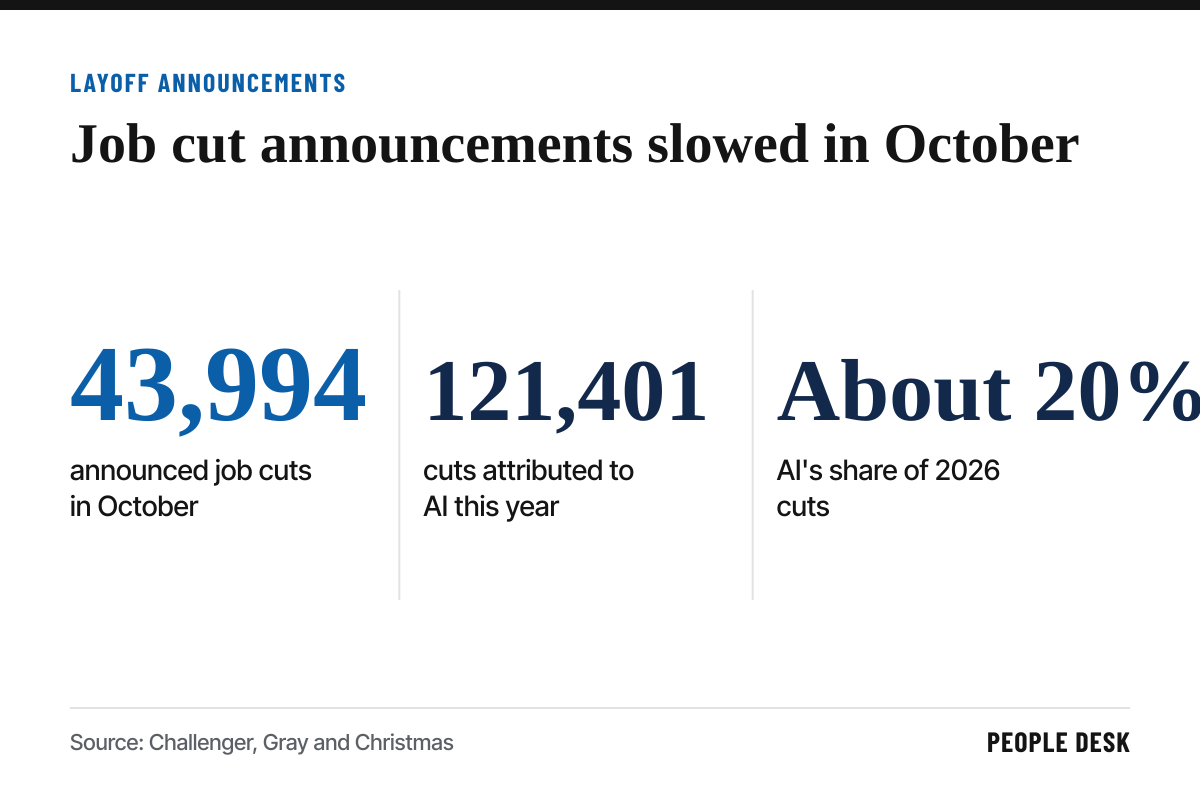
Layoff announcements have fallen sharply this year compared with 2025, but restructuring has not stopped. UPS plans to cut up to 30,000 operational jobs in 2026, mostly through buyouts and attrition. In Louisville, Brown-Forman closed its bourbon cooperage in 2025 and laid off 640 workers. When reductions are unavoidable, federal law sets rules on how much warning employees must receive.
Who the law covers
The Worker Adjustment and Retraining Notification Act generally applies to employers with 100 or more employees, not counting part-time employees, or 100 or more employees who together work at least 4,000 hours a week excluding overtime. Private for-profit and nonprofit employers are covered, as are public and quasi-public entities that operate in a commercial context.
Part-time employees, defined under the law as those who average fewer than 20 hours a week or have worked fewer than six of the prior 12 months, do not count toward the 100-employee threshold. They are, however, entitled to notice if they are affected.
What triggers notice
Two kinds of events require notice. A plant closing is the permanent or temporary shutdown of a single site, or one or more facilities or operating units within a site, that results in an employment loss for 50 or more employees during a 30-day period.
A mass layoff is a reduction in force that is not a plant closing but results in an employment loss at a single site during a 30-day period for either 500 or more employees, or 50 to 499 employees if they make up at least 33 percent of the active workforce at that site.
Employment loss includes termination, a layoff exceeding six months or a reduction in hours of more than 50 percent in each month of a six-month period. Employers should also watch for aggregation. Separate small layoffs within a 90-day period can be combined to reach the threshold unless the employer shows they resulted from separate and distinct causes.
What notice must include
Covered employers must provide 60 calendar days of written notice to each affected employee or their union representative, to the state dislocated worker unit and to the chief elected official of the local government. The notice must include specific information, such as whether the action is permanent or temporary, the expected date and the name of a company official to contact.
There are limited exceptions that allow shorter notice, including a faltering company seeking new capital, unforeseeable business circumstances and natural disasters. Employers relying on an exception must still give as much notice as practicable and explain why the full period was not possible.
The cost of getting it wrong
An employer that violates the law can owe each affected employee back pay and benefits for up to 60 days. Failure to notify the local government can bring a civil penalty of up to $500 for each day of violation. Beyond the legal cost, a poorly handled layoff damages trust with remaining employees and can hurt recruiting for years.
Several states have their own mini-WARN laws with lower thresholds or longer notice periods. Kentucky does not have its own version, but employers with sites in other states should check local rules. Public WARN filings are often the way local news learns about layoffs, so communication planning should assume the notice will become public quickly.
Handling the people side
Notice is the legal minimum. Employers that handle reductions well do more. They tell employees directly before the news reaches the media, explain severance and benefit continuation clearly, and give affected workers time and support to find new jobs.
Outplacement services, which help departing employees with resumes, job search strategy, interview preparation and career coaching, are one of the most effective tools. State rapid response teams, funded under the Workforce Innovation and Opportunity Act, can also bring information on unemployment insurance, training and local job openings directly to affected workers.
The employees who stay need attention too. Survivors often worry about the next round and may start looking elsewhere, beginning with the strongest performers. Clear communication about the reasons for the reduction and the plan going forward helps keep them.
Employers considering reductions driven by automation should also review state AI notice laws, discussed in our report on AI and layoffs. Kentucky employers can learn more about local reemployment resources in our coverage of logistics changes in Louisville.
Sources
- U.S. Department of Labor, Employment and Training Administration, WARN Act
- Food Dive, Jim Beam Pauses Production and Industry Layoffs
- WTOP, UPS Looks to Cut Up to 30,000 Jobs This Year
- Challenger, Gray and Christmas, The Challenger Report
We link to the original reports and filings wherever possible. See something we got wrong? Tell us and read our corrections policy.