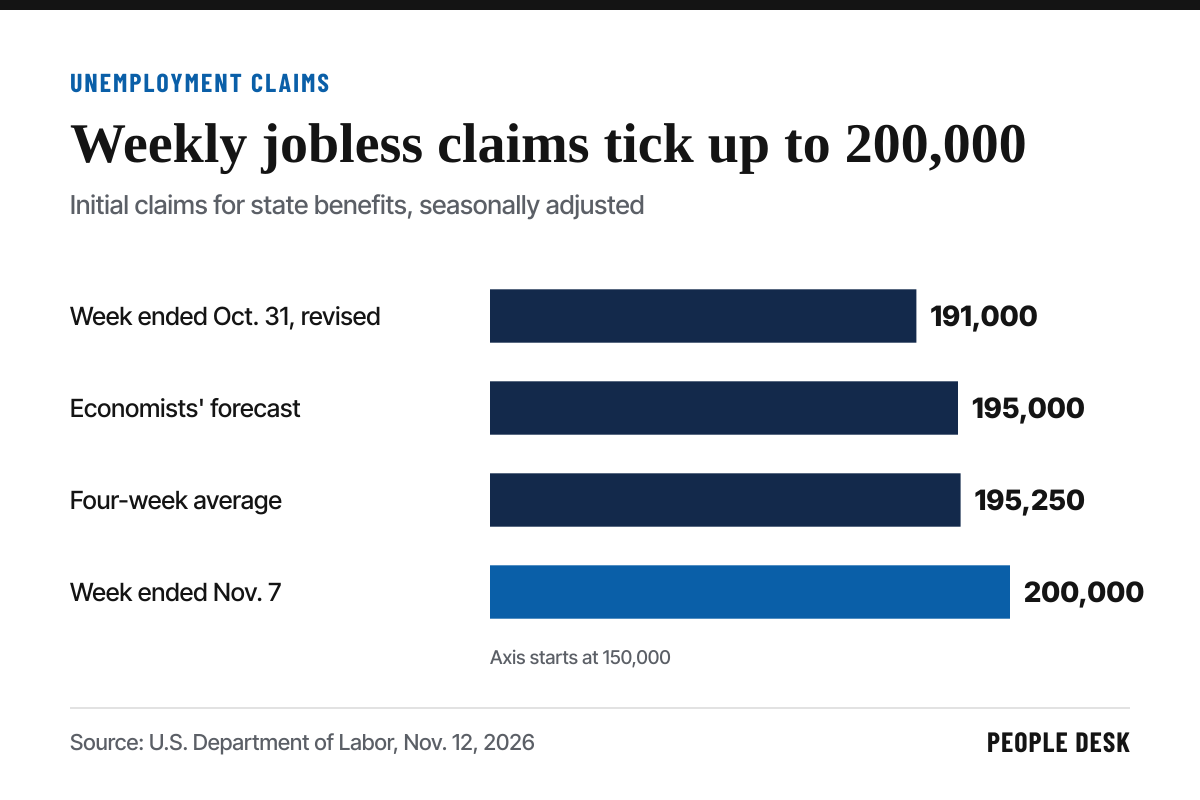
The number of Americans filing new claims for unemployment benefits rose last week but stayed low by historical standards, a sign that employers are still holding on to their workers. Initial claims for state unemployment benefits rose 9,000 to a seasonally adjusted 200,000 for the week ended Nov. 7, the Labor Department said Thursday.
Economists polled by Reuters had forecast 195,000. The prior week's figure was revised up to 191,000 from the 189,000 first reported. The four-week moving average, which smooths out weekly swings, was unchanged at 195,250.
Low and steady
Claims have stayed at or below 200,000 since mid-September, according to Reuters, and have not topped 230,000 in any single week this year. Claims are watched closely because they are one of the most timely readings on layoffs, released every Thursday for the week before.
Before seasonal adjustment, states recorded 206,982 initial claims, an increase of 28,870, or 16.2 percent, from the previous week. Seasonal factors had expected a smaller increase. The comparable week in 2025 had 238,729 unadjusted claims.
Continuing claims, which count people receiving benefits after an initial week, fell in the latest report, according to Reuters. That number is often read as a rough gauge of how quickly laid-off workers find new jobs, though it can also fall when people exhaust their benefits, which last 26 weeks in most states.
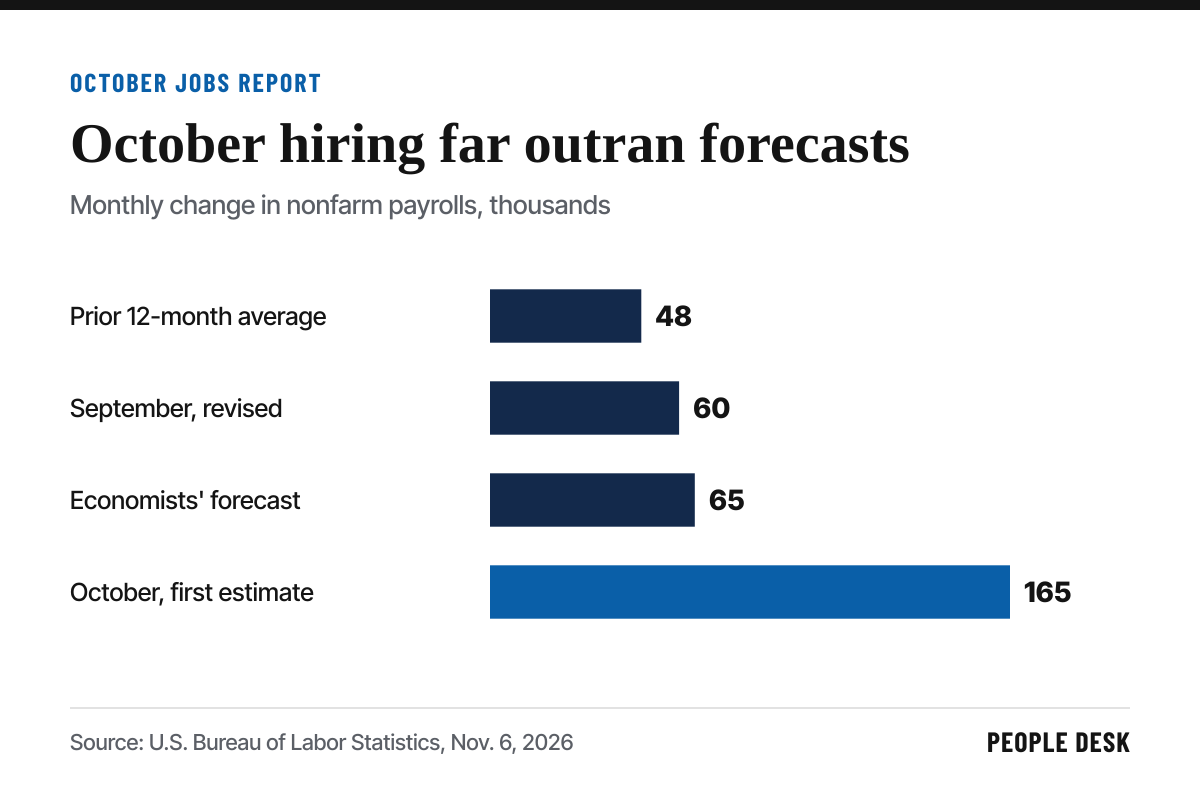
The report followed last week's October jobs report, which showed payrolls rising by 165,000 and the unemployment rate falling to 4.1 percent from 4.2 percent in September. We cover that report in our October jobs analysis.
A smaller labor force
Low claims do not necessarily mean a hot job market. Some economists argue that a shrinking workforce, driven by retirements and the Trump administration's immigration crackdown, is a key reason claims are so low. Fewer workers means fewer people who could file.
"A generally smaller labor force could mean fewer workers to file for unemployment insurance," said Veronica Clark, an economist at Citigroup, according to Reuters.
Other measures point to a market where layoffs are rare but finding a new job can take time. Reuters reported that the median duration of unemployment rose to 11.9 weeks in October. People who lose jobs are not being let go in large numbers, but those who are out of work are taking longer to land new ones.
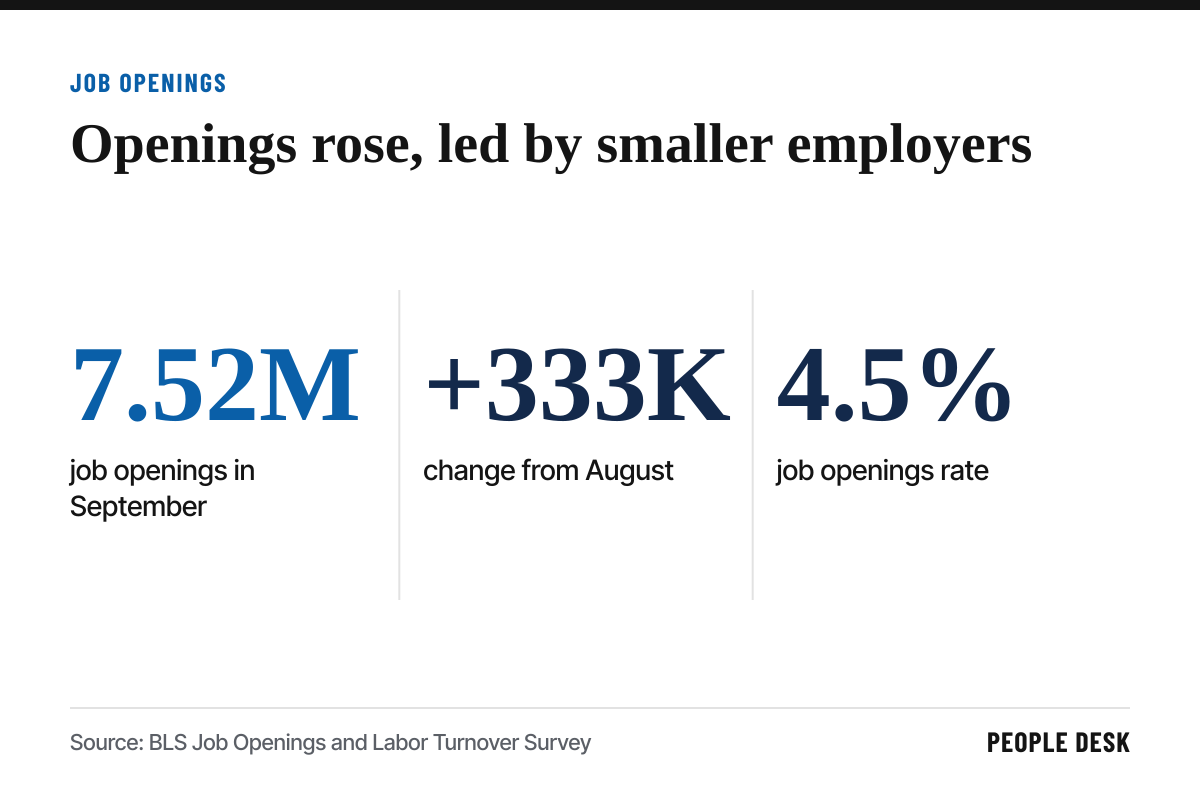
That pattern matches what employers report in other data. Job openings rose to 7.52 million in September and quits climbed to their highest level since March 2025, as we reported in our JOLTS analysis. Announced layoffs fell to 43,994 in October, the lowest October total since 2023, according to Challenger, Gray and Christmas.
What employers should take from it
For hiring managers, low claims mean the pool of recently laid-off, experienced workers is thin. Most candidates are already employed and need a reason to move. That puts more weight on pay, schedules and hiring speed, as we explained in our hiring speed guide.
It also means retention deserves attention. When few employers are cutting staff, the workers most likely to leave are the ones being recruited away. Stay interviews and clear career paths are among the most practical defenses, covered in our guide to stay and exit interviews.
Kentucky employers face an even tighter version of the same problem. The state's labor force has been shrinking while its unemployment rate sits above the national level, as described in our report on Kentucky's labor force.
Holiday noise ahead
Weekly claims can swing during the holiday season as seasonal hiring and short-term layoffs move through the data. Economists expect layoffs to remain low through the end of the year, though holiday volatility could cause spikes, according to Reuters. Planned seasonal hiring reached about 445,000 in October, the highest for the month since 2009, as we reported in our seasonal hiring report.
The next weekly report, covering the week ended Nov. 14, is scheduled for Thursday, Nov. 19. A single week rarely changes the picture. The four-week average and the trend in continuing claims, which track people still receiving benefits, are better guides to whether layoffs are starting to rise.
For now, the message from the claims data is consistent with the rest of the labor market. Employers are not cutting, workers who lose jobs are taking longer to find new ones, and the supply of available talent remains tight.
Sources
- U.S. Department of Labor, Unemployment Insurance Weekly Claims
- Quartz, U.S. Weekly Jobless Claims Edged Up to 200,000
- Honolulu Star-Advertiser via Reuters, U.S. Jobless Claims Rise as Home Sales Hit 16-Year Low
- RTTNews, U.S. Weekly Jobless Claims Rebound More Than Expected
- QNC News via Reuters, US Jobless Claims Rise to 200,000 as Labor Market Stays Firm
- SRN News via Reuters, US Weekly Jobless Claims Increase
- yourNEWS, Jobless Claims Rise to One-Month High
We link to the original reports and filings wherever possible. See something we got wrong? Tell us and read our corrections policy.