Hiring managers often describe the same disappointment. After weeks of interviews, the team finally agrees on a candidate, makes an offer and learns that the person accepted another job a few days earlier. Slow hiring rarely shows up as a line item, but it costs employers their best applicants every week.
How long hiring takes now
SHRM's 2026 Recruiting Executives Benchmarking report, based on data from more than 4,600 organizations, found that the median time to fill nonexecutive positions was 39 calendar days, measured from requisition to offer acceptance. That was an improvement from the prior year.
Some roles take far longer. The 2026 NSI National Health Care Retention and RN Staffing Report found that hospitals needed about 78 days to recruit an experienced registered nurse. Executive searches and specialized technical roles routinely run for months.
The number of interviews keeps climbing. Recruiting software company Gem counted about 20 interviews per nontechnical hire and about 36 per technical hire in its 2025 customer data, according to a summary of its 2026 benchmark. Every round adds days for scheduling, feedback and debate.
Why speed matters more now
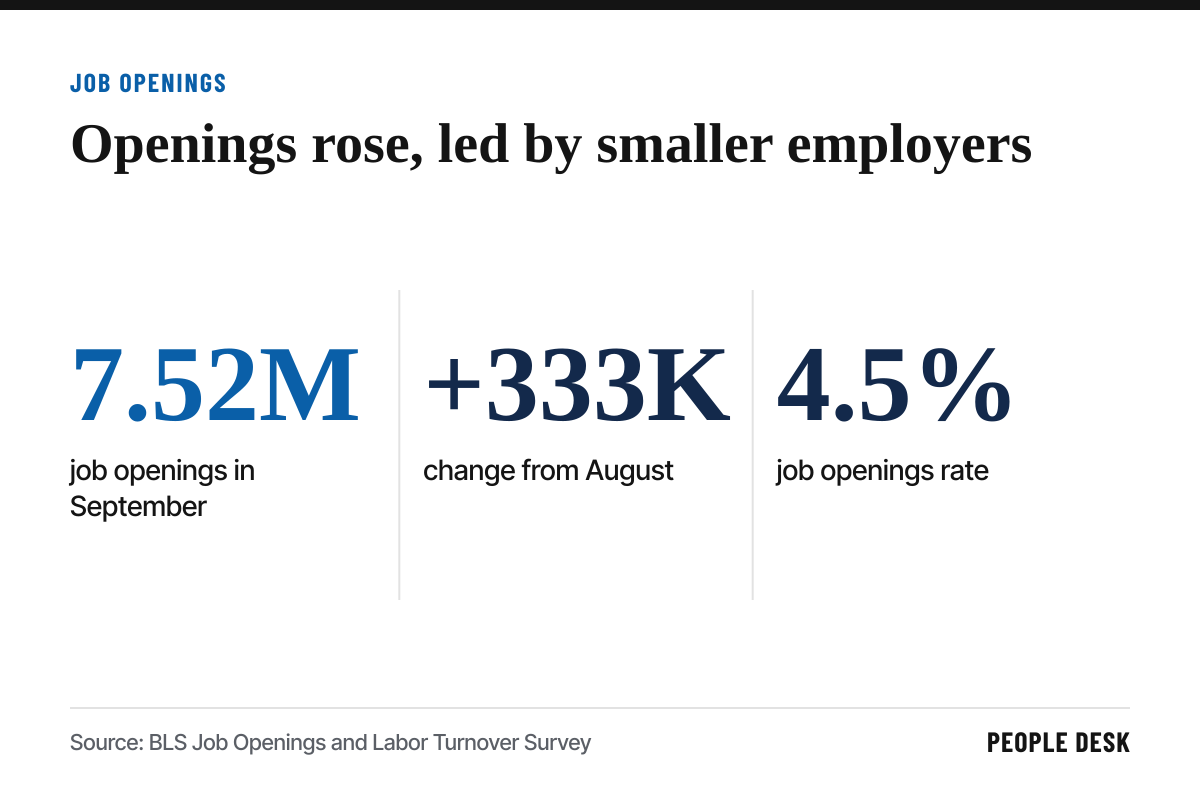
The labor market has shifted in candidates' favor in recent months. Job openings rose to about 7.5 million in September and quits reached their highest level since March 2025, as we reported in our JOLTS analysis. Workers who are confident enough to quit are also confident enough to accept the first good offer they receive.
Strong candidates also tend to have the most options. A slow process filters out exactly the people an employer most wants to hire, leaving those who had fewer alternatives. Over time, that can lower the quality of a workforce without anyone noticing why.
Where time gets lost
Most delays come from a few predictable places. Requisitions sit waiting for approval before a role is even posted. Applications pile up without review for days. Scheduling interviews across busy calendars takes longer than the interviews themselves. Feedback arrives late or not at all. Final decisions wait for one more stakeholder.
Each step seems reasonable on its own. Together, they turn a two-week process into a six-week one.
Approval chains deserve special attention. A requisition that needs sign off from finance, a department head and an executive can lose a week before the first candidate is contacted. Many employers now preapprove headcount in the annual budget so that replacement hires can move straight to posting.
Practical ways to move faster
Start before the role opens. Keep approved job descriptions, pay ranges and interview plans ready for roles you hire regularly, so a requisition can be posted the same day it is approved.
Review applications daily. A candidate who hears back within 24 to 48 hours is far more engaged than one who waits a week. For hourly roles, many employers now schedule interviews automatically or make same-day offers. UPS, for example, says many seasonal applicants can receive job offers in under seven minutes.
Reduce interview rounds. Decide in advance who needs to meet each candidate and why. Combine interviews into a single block or day when possible. Use a structured format with clear scoring so the team can decide after fewer conversations, an approach we explain in our guide to structured interviews.
Set feedback deadlines. Ask interviewers to submit scores the same day. Hold a short decision meeting within 48 hours of the final interview. Give the hiring manager authority to make the offer without additional approvals when the candidate is within the approved range.
Keep candidates informed
Speed is only part of the experience. Candidates who know what to expect at each step, and who hear from a real person when timelines change, are far more patient than those left waiting in silence. Our report on candidate experience explains why communication matters even for applicants who are turned down.
Track time to fill and time in each stage for every role. Look for the stage where candidates wait longest and where the most candidates drop out. Fixing one bottleneck often shortens the whole process by a week or more.
Faster hiring also reduces cost. SHRM's 2026 data puts the median cost per executive hire at $15,000, and every extra week a role stays open adds overtime, missed work or temporary staffing. We cover the full cost picture in our report on hiring costs and employer brand.
Sources
- SHRM, 2026 Recruiting Benchmarking Data Brief
- Stealth Agents, Cost per Hire Statistics 2026
- Stealth Agents, Healthcare Staffing Shortage Statistics 2026
- SupplyChain247, UPS to Hire 100,000 Seasonal Workers
- U.S. Bureau of Labor Statistics, Job Openings and Labor Turnover Summary
We link to the original reports and filings wherever possible. See something we got wrong? Tell us and read our corrections policy.