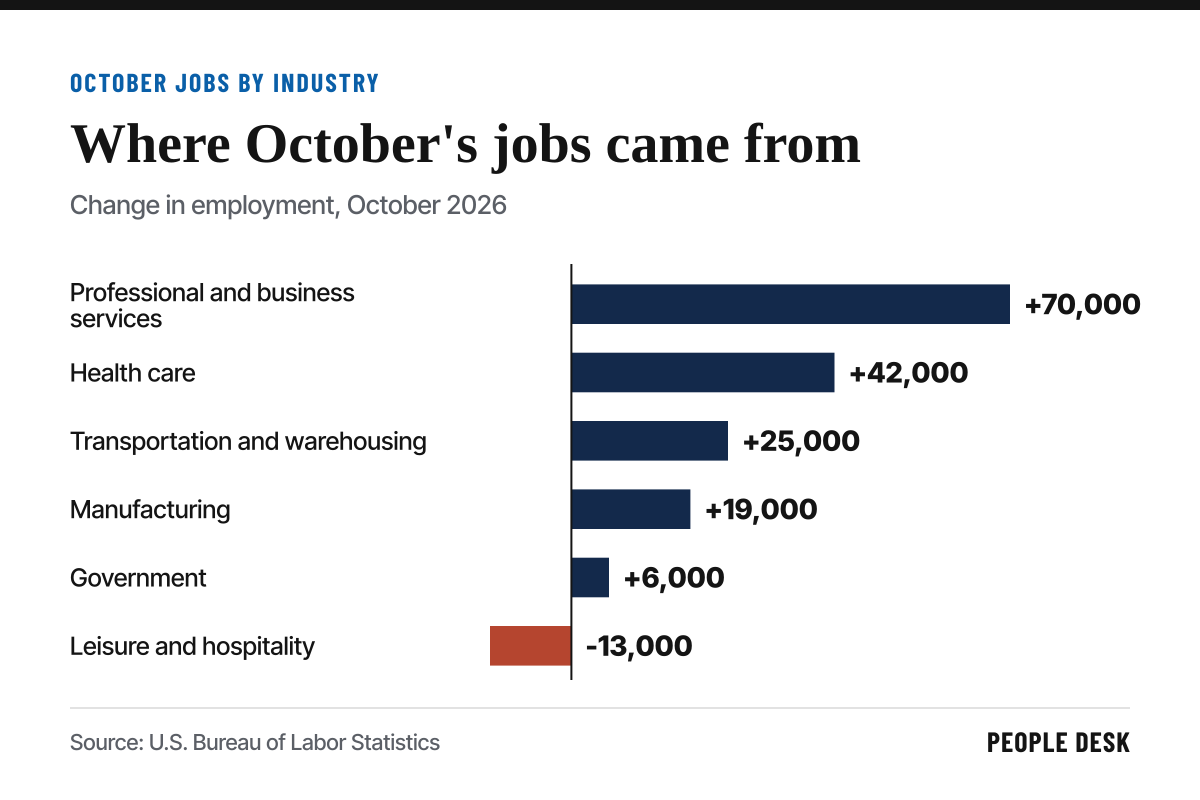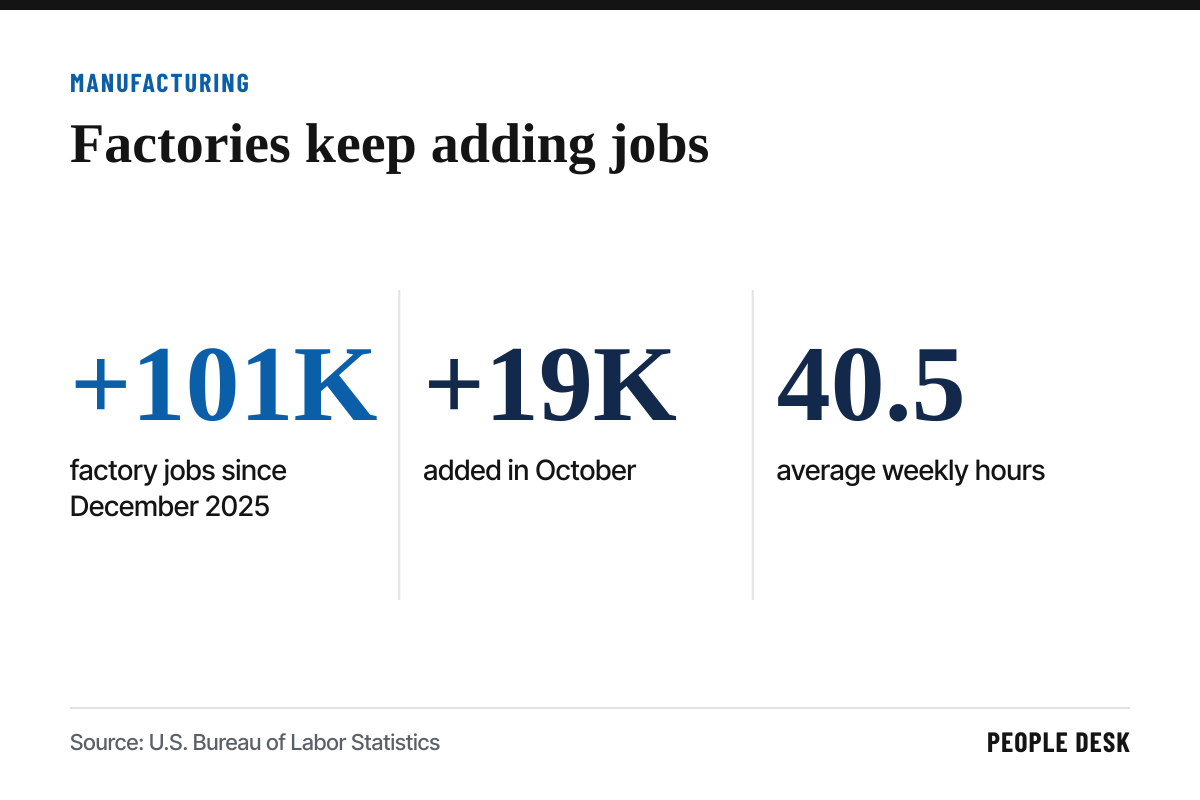
Manufacturing has been one of the quieter success stories of 2026. After shedding jobs through much of 2025, factory employment reached a low point in December and has climbed since. The October jobs report showed another gain of 19,000, bringing the total since December to about 101,000, according to the Bureau of Labor Statistics.
What the numbers show
The recovery has been steady rather than dramatic. Monthly gains have been modest, but consistent growth over most of the year adds up. The average factory workweek held at 40.5 hours in October, a sign that plants are keeping existing workers busy as they add new ones.
The rebound came as the broader labor market sent mixed signals. Payroll growth averaged only 48,000 a month over the 12 months before October, so manufacturing's contribution stood out, as we noted in our October jobs report analysis. We break down the full sector picture in our industry jobs report.
What is driving it
Several forces support factory hiring. Investment in new and expanded facilities has grown in recent years, especially in semiconductors, batteries, electric vehicles and other advanced manufacturing. Companies seeking to shorten supply chains have moved some production closer to U.S. customers. Defense and aerospace demand has also supported hiring.
Kentucky has been part of that story, with major investments in battery and automotive production. Those projects create demand not only for production workers but for maintenance technicians, electricians and engineers.
The long-term gap
Even with recent gains, manufacturers face a large workforce gap. Deloitte and The Manufacturing Institute project that U.S. manufacturing could need up to 3.8 million workers between 2024 and 2033, and that 1.9 million of those roles could go unfilled if current challenges are not addressed. Retirements account for much of the need.
Skilled roles are the hardest to fill. Maintenance technicians, machinists, controls engineers and electricians are in short supply across the country. Our coverage of the electrician shortage explains why data center construction has made electrical talent especially scarce.
The retention challenge
Hiring is only half the problem. Many plants that rebuilt headcount this year are seeing new workers leave within months. Production jobs can be physically demanding, with rotating shifts, mandatory overtime and repetitive work. When the reality of the job differs from expectations, turnover follows.
Deloitte's research found that employees are 2.7 times less likely to leave in the next 12 months if they feel they can acquire skills important for the future. That finding points to a practical strategy. Plants that offer visible training paths, from operator to technician to team lead, give workers a reason to stay.
Scheduling also matters. Flexible shift options, predictable overtime and shift swapping help workers balance family responsibilities. Many manufacturers now offer compressed workweeks or weekend-only shifts to attract workers who cannot work traditional schedules.
The first weeks on the floor matter most. Plants that pair new operators with trained peer mentors, ramp up production targets gradually and check in at 30, 60 and 90 days tend to keep more of the people they hire, an approach covered in our onboarding guide.
We explore these strategies in more depth in our manufacturing workforce report.
Building a pipeline
Apprenticeships are one of the most effective ways to develop skilled manufacturing workers. Registered programs combine paid work with structured training and lead to recognized credentials, as explained in our apprenticeship guide.
Partnerships with high schools and community colleges introduce students to manufacturing careers before they choose other paths. In Louisville, the Academies of Louisville connect students with employers in advanced manufacturing, as described in our report on the Academies.
What to watch
Manufacturing employment can shift quickly with interest rates, trade policy and demand from key industries. Watch the monthly jobs report for factory employment and hours, and watch new orders data for signs of future demand. A shorter workweek often signals weakening demand before layoffs begin.
Overtime hours are another early signal. When factory overtime climbs, plants are stretching current staff rather than hiring, which often precedes new job postings. When overtime falls, employers may be preparing to slow hiring or reduce shifts.
For now, the trend is positive. The plants that benefit most will be those that treat this year's hires as the start of a long-term workforce rather than a short-term fix.
Sources
- U.S. Bureau of Labor Statistics, The Employment Situation for October 2026
- IndustryWeek, October Jobs Report Coverage
- Deloitte, US Manufacturing Could Need New Employees by 2033
- The Manufacturing Institute, Manufacturers Need as Many as 3.8 Million New Employees by 2033
We link to the original reports and filings wherever possible. See something we got wrong? Tell us and read our corrections policy.