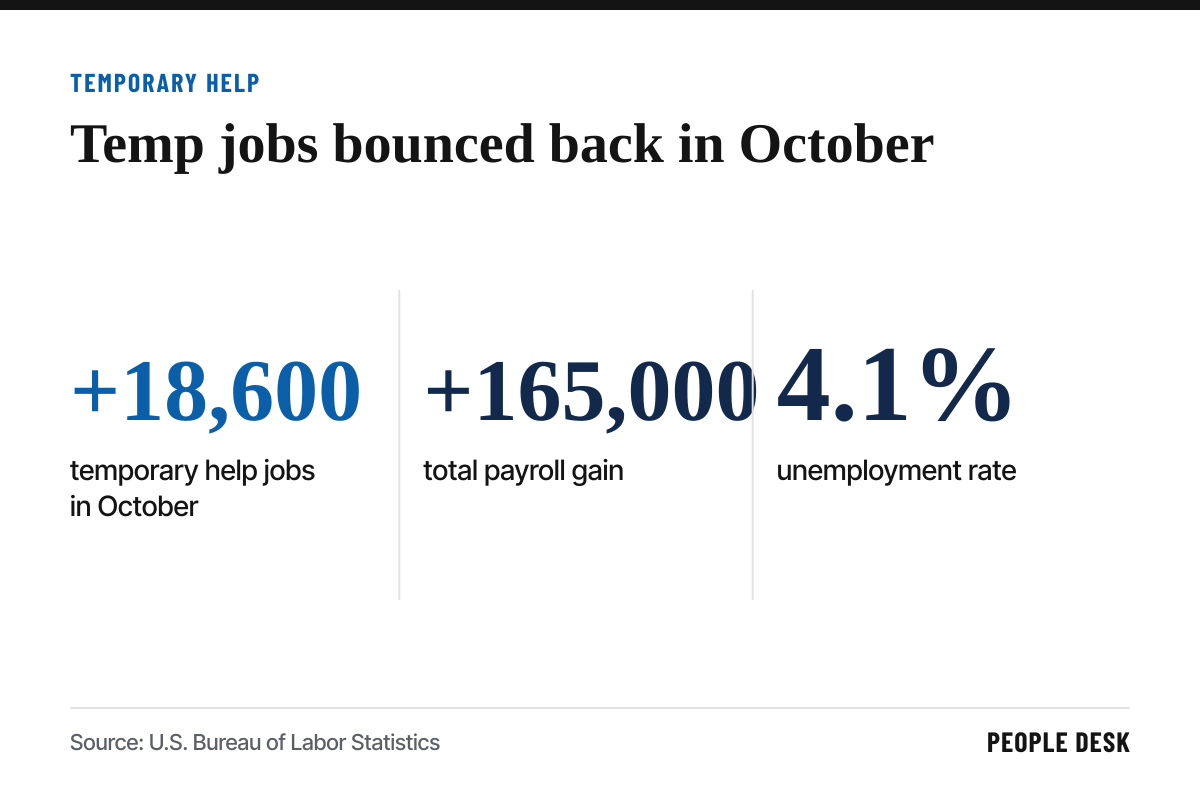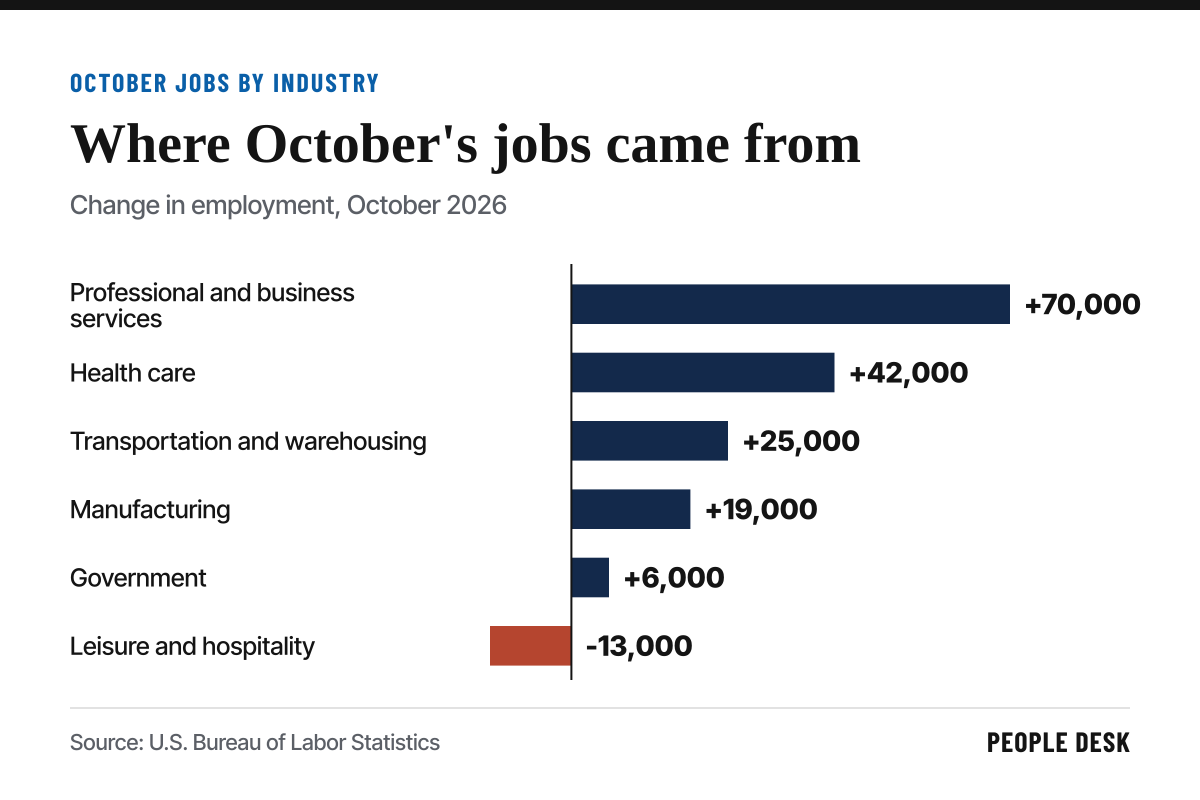
The October jobs report surprised economists with a gain of 165,000 jobs, more than double the forecast. A closer look at the industry detail shows that the gains were concentrated in a few sectors, while others stood still or slipped. For employers, the mix says more about competition for workers than the headline does.
Source: U.S. Bureau of Labor Statistics, Employment Situation, October 2026
Professional and business services led
Professional and business services added 70,000 jobs in October, according to the Bureau of Labor Statistics, far above the sector's average monthly gain of 15,000 over the past 12 months. Part of that increase came from temporary help services, which added 18,600 jobs after a revised loss of 5,600 in September. We explain why temp hiring often moves first in our report on temporary help employment.
The professional services category also includes accounting, legal, engineering, consulting and administrative support firms. Strong hiring there often reflects business clients expanding projects or outsourcing work they would otherwise do in house.
Health care kept growing
Health care added 42,000 jobs in October. The industry has been one of the most consistent sources of job growth for years, driven by an aging population and steady demand for care. Growth does not mean easy hiring, however. Hospitals still report registered nurse vacancy rates above 8 percent, and turnover has ticked back up, as we detail in our hospital nurse staffing report.
Delivery and logistics picked up
Transportation and warehousing added 25,000 jobs. Couriers and messengers accounted for 17,000 of that increase and air transportation for another 4,000. Seasonal preparation likely played a role. Amazon announced plans to hire 300,000 workers for the holidays and UPS planned to add 100,000 seasonal workers, according to Challenger, Gray and Christmas. Our coverage of this year's seasonal hiring explains how concentrated those plans were.
Manufacturing added 19,000 jobs and has grown by 101,000 since a low point in December 2025, as we reported in our manufacturing workforce analysis.
Hospitality slipped
Leisure and hospitality lost 13,000 jobs in October. That decline came just one month after the sector recorded a large jump in resignations. Quits in accommodation and food services rose by 197,000 in September, according to the Job Openings and Labor Turnover Survey. Restaurants and hotels appear to be struggling to replace workers who leave.
Private and public sector
Private employers added 159,000 jobs in October and government added 6,000. Payroll processor ADP reported a smaller private sector gain of 86,000 in its own October estimate, which was still above expectations. The two measures use different methods and often diverge from month to month.
Pay growth was steady. Average hourly earnings rose 14 cents, or 0.4 percent, to $38.00. The unemployment rate edged down to 4.1 percent and has stayed between 4.1 and 4.3 percent since March.
What the mix means for employers
When hiring is concentrated in a few sectors, employers in those sectors compete hardest for the same people. Health systems, logistics companies and professional service firms are all drawing on overlapping pools of administrative, technical and entry level workers. A medical office and a distribution center may both be trying to hire the same customer service representative.
Employers in slower sectors are not off the hook. Hospitality and retail workers who leave often move to the growing sectors, attracted by steadier hours or better benefits. Restaurants and hotels that want to hold on to their people need to compete on schedules and management quality as much as pay.
Benefit design is another lever. Health care and logistics employers increasingly compete on shift differentials, tuition assistance and quick access to paid time off. Smaller employers in other sectors can match some of those offers at modest cost by publishing clear schedules and promoting from within.
Regional differences matter as well. National industry totals hide large local swings, and a metro area dominated by one large employer can see conditions change quickly when that employer expands or cuts back. Louisville's experience with logistics, which we cover in our report on UPS and the Louisville workforce, is a good example.
Across all sectors, the practical response is the same. Know what competitors in your area are paying, shorten the time between application and offer, and invest in the managers who decide whether new hires stay. The November jobs report, due December 4, will show whether October's gains carried forward.
Sources
- U.S. Bureau of Labor Statistics, The Employment Situation for October 2026
- Fox Business, US Economy Adds 165,000 Jobs in October
- 4 Corner Resources, October Jobs Report Analysis
- Digg via CNBC, October Jobs Report Summary
- CPA Practice Advisor, Fewest October Job Cuts in Three Years
- U.S. Bureau of Labor Statistics, Job Openings and Labor Turnover Summary
We link to the original reports and filings wherever possible. See something we got wrong? Tell us and read our corrections policy.