Economists have long treated temporary help employment as an early warning system for the broader job market. When businesses grow uncertain, temps are usually the first workers they release. When demand returns, temps are usually the first they add, before committing to permanent hires. The last two months of data show why the series deserves attention.
A sharp drop, then a rebound
In the September jobs report released October 2, the Bureau of Labor Statistics reported that temporary help services employment fell by 10,900. Staffing Industry Analysts called it the largest decrease of the year. Revisions made the picture worse at first. The July change was revised from a gain of 5,200 to a loss of 10,000, and the August gain of 6,800 was revised down to just 200.
The temporary agency penetration rate, which measures temps as a share of all jobs, held at 1.56 percent in September, according to SIA. That small figure carries outsized meaning because it tends to turn before total employment does.
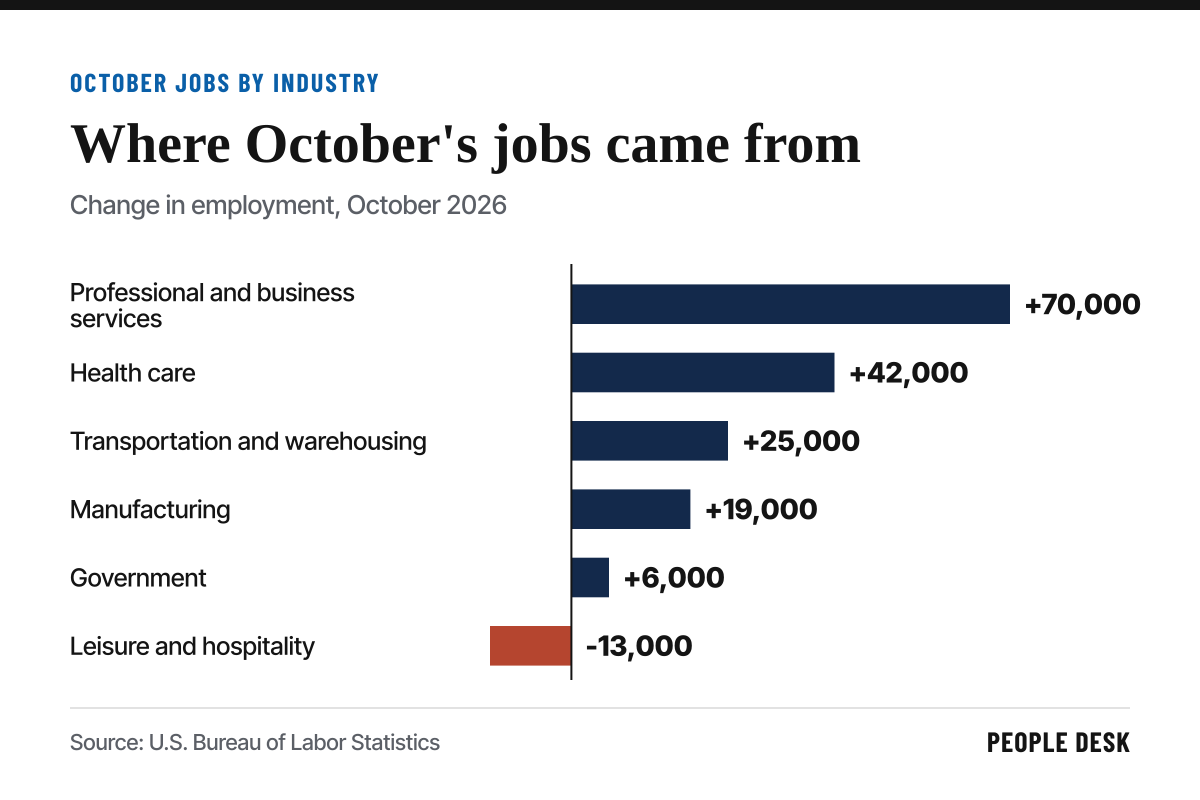
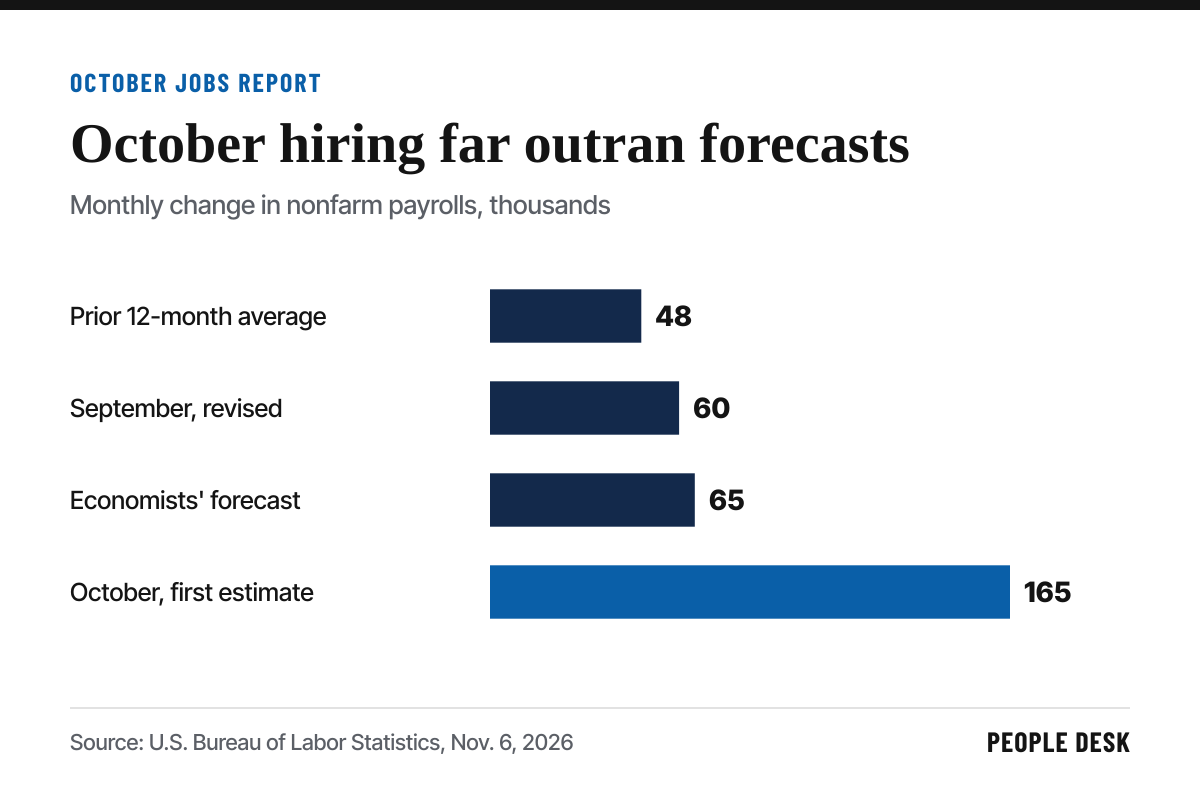
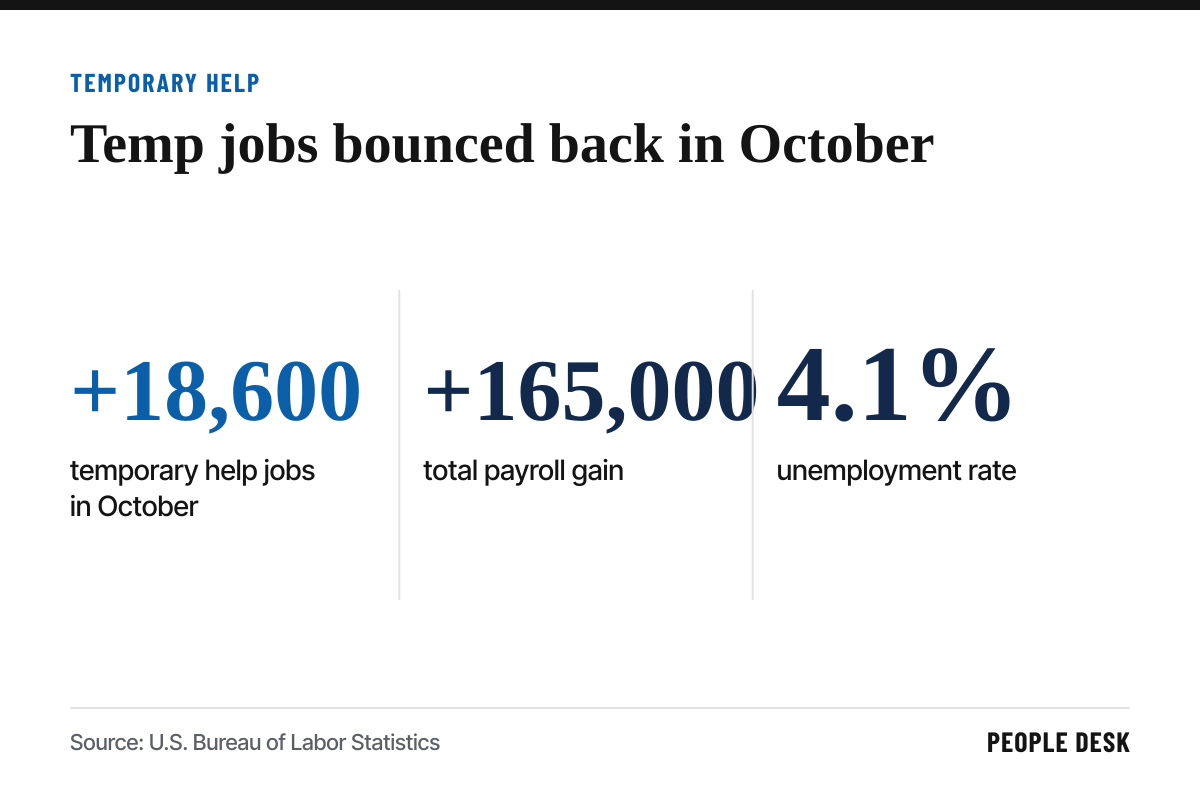
October moved the other way. Temporary help services added 18,600 jobs after a revised loss of 5,600 in September, according to an analysis of the latest Bureau of Labor Statistics report. The gain helped professional and business services lead October's hiring with 70,000 new jobs, far above that sector's average monthly gain of 15,000 over the prior year. We cover the full October breakdown in our look at where October's jobs came from.
Why temps move first
The logic is straightforward. A temporary worker can be added or released with little cost and no severance. Many manufacturers, warehouses and back offices use temps as a buffer. When orders slow, they cut the buffer before touching core staff. When orders pick up, they test demand with temps before opening permanent requisitions.
Staffing Industry Analysts noted that the temp figures have been tracking developments in trade policy. Industrial and office clerical roles make up most temporary volume, and both are sensitive to shifts in tariffs, inventory and supply chains. A manufacturer unsure about input costs is more likely to hold off on permanent hiring and rely on temps instead.
Temp data also shows which kinds of work are changing. A drop concentrated in light industrial roles points to softer manufacturing and warehouse demand, while a decline in office and clerical temps often reflects companies trimming administrative budgets or automating routine tasks. Employers who compare their own temp usage with the national figures can see whether their experience matches the broader market.
What one good month does not prove
A single month is not a trend. Revisions to temp data have been large this year, and the October figure could change when November data arrives on December 4. Employers should look at three months together before drawing conclusions.
Still, the October rebound lines up with other signals. Job openings rose to about 7.5 million in September and quits reached their highest level since March 2025, as we reported in our October jobs report analysis. Layoff announcements in October were the lowest for the month since 2023, and manufacturing added 19,000 jobs.
Using temp labor well
For employers, temp staffing is a tool with real advantages and real costs. It adds flexibility during uncertain periods and lets a company evaluate workers before making permanent offers. Temp-to-hire arrangements can shorten the hiring process for roles that are hard to fill through job boards alone.
The costs show up in turnover and training. Temporary workers who do not see a path to permanent employment often leave as soon as a better offer appears, which can leave a plant retraining new people every few weeks. That pattern mirrors the early turnover problem we describe in our manufacturing workforce report.
The most effective approach is usually a clear conversion policy. Workers should know how long an assignment typically lasts, what performance leads to a permanent offer and what that offer pays. Employers that use temp labor as a structured pipeline rather than a revolving door get the flexibility without the churn.
Employers relying heavily on staffing agencies should also review their responsibilities. Many legal obligations are shared between the agency and the host employer, including workplace safety. Our coverage of Form I-9 enforcement and federal heat safety enforcement explains two areas where joint responsibility can surprise companies that assumed the agency handled everything.
Sources
- Staffing Industry Analysts, October 2026 US Jobs Report
- Staffing Industry Analysts, Temp Labor Falls in September
- U.S. Bureau of Labor Statistics, Employment Situation for September 2026
- 4 Corner Resources, October Jobs Report Analysis
- Fox Business, US Economy Adds 165,000 Jobs in October
We link to the original reports and filings wherever possible. See something we got wrong? Tell us and read our corrections policy.