Hospitality has always had high turnover. Restaurants, hotels and entertainment venues rely on large numbers of hourly workers, many of them young or working part time. But recent data shows something more pointed. Workers in the sector are quitting at a faster pace even as overall hospitality employment slips.
What the data shows
The Bureau of Labor Statistics Job Openings and Labor Turnover Survey for September showed quits rising sharply across the economy, to their highest level since March 2025. Accommodation and food services led the increase, with quits up by 197,000 for the month, as we noted in our JOLTS analysis.
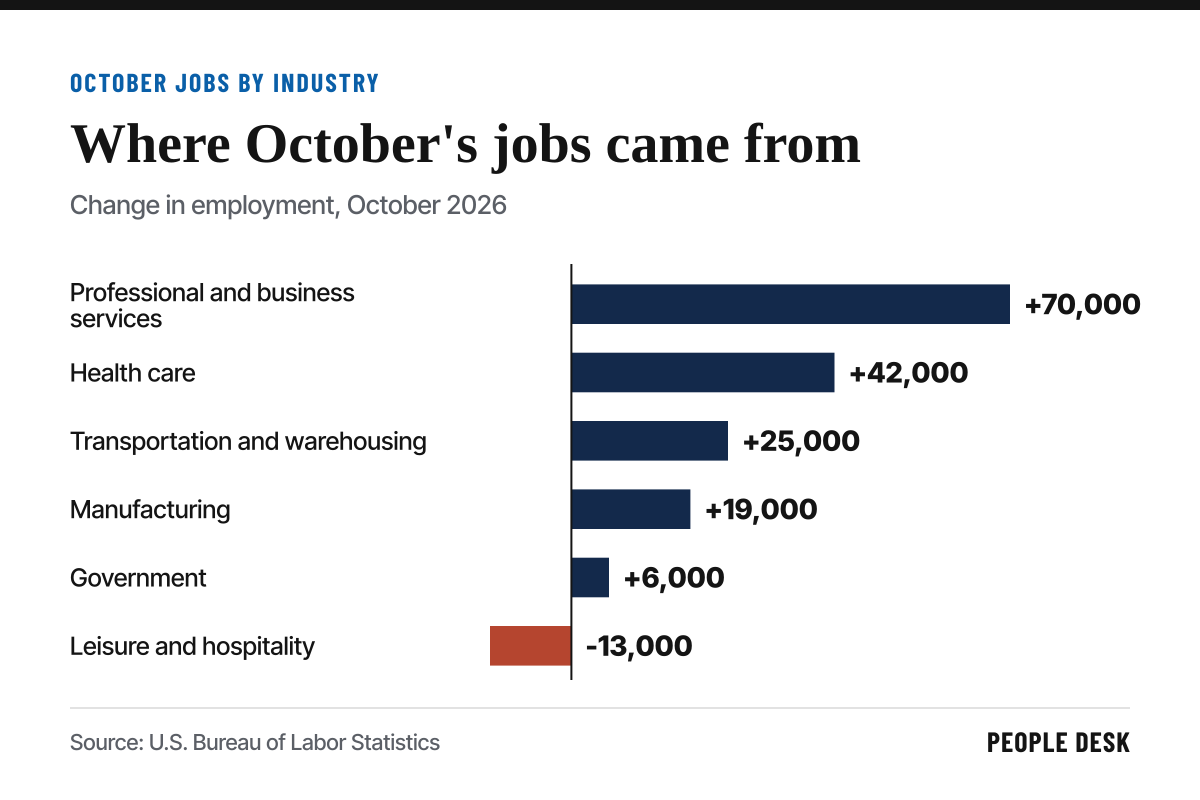
The October jobs report then showed leisure and hospitality employment falling by 13,000, one of the weaker sectors in an otherwise solid month. We cover the full sector breakdown in our industry jobs report.
Taken together, the numbers suggest employers are losing workers faster than they can replace them, or choosing not to replace some of them as costs rise.
Why hospitality workers leave
Hospitality jobs often combine physically demanding work, irregular schedules and modest pay. Many workers rely on tips that vary from shift to shift. Schedules can change with little notice, which makes it hard to manage childcare, school or a second job.
When the broader labor market gives workers more options, hospitality employees can move to retail, warehousing, health care support or other industries with steadier hours. Seasonal hiring at large logistics companies, described in our seasonal hiring report, adds competition each fall.
Tenure in the industry is short. BLS tenure data shows leisure and hospitality workers have among the shortest median tenure of any sector, as covered in our report on tenure and turnover costs.
What employers can control
Predictable schedules are one of the most powerful retention tools in hospitality. Posting schedules two weeks in advance, limiting last-minute changes and letting workers swap shifts through an app can make jobs far easier to keep. Some cities and states have adopted fair workweek laws that require advance notice for certain employers, so multistate operators should check local rules.
Pay clarity matters too. Workers want to know what they will earn, including base pay, average tips and any shift differentials. Faster pay, such as weekly paychecks or access to earned wages before payday, can help workers who live paycheck to paycheck.
Small gestures matter more than many managers expect. Free shift meals, transit passes, clean break rooms and recognition for strong shifts all signal that the employer values the people doing the work.
Managers make a large difference. Shift managers and general managers in restaurants and hotels often supervise large teams with little training. Gallup research links ongoing coaching for managers with higher engagement, as explored in our report on manager coaching.
Early turnover
Many hospitality workers leave within the first weeks. A rushed first shift, unclear expectations or a lack of support can drive a new hire away before they settle in. Pairing new workers with an experienced buddy, scheduling a check-in after the first week and making sure training happens before a worker is left alone on a busy shift can reduce early exits. Our guide to the first 90 days offers more detail.
Hiring faster
Hourly candidates often apply to several jobs at once and accept the first reasonable offer. Restaurants and hotels that respond within a day, schedule interviews quickly and make offers on the spot when appropriate have an advantage. Short mobile applications and text-based scheduling help.
Referrals from current staff are especially effective in restaurants and hotels, where workers often know others in the industry. Our guide to employee referral programs covers how to structure rewards.
The holiday season will bring higher demand for restaurants, hotels and event venues, along with more competition for workers. Employers that focus on predictable scheduling, clear pay and supportive managers will be better positioned to staff up and keep their teams through the winter.
Hospitality turnover will never disappear entirely. But the difference between a restaurant that loses most of its staff each year and one that keeps many of them for several years often comes down to these basic practices. In a market where workers are confident enough to quit, those practices matter more than ever.
Some employers are also cross-training workers across front and back of house or across hotel departments. Cross-training gives workers more hours, more variety and a path to higher pay, while giving managers more flexibility when someone calls out.
Sources
- U.S. Bureau of Labor Statistics, Job Openings and Labor Turnover Summary
- U.S. Bureau of Labor Statistics, The Employment Situation for October 2026
- Honolulu Star-Advertiser via Reuters, U.S. Job Openings Jump as Resignations Surge
- U.S. Bureau of Labor Statistics, Employee Tenure Summary
We link to the original reports and filings wherever possible. See something we got wrong? Tell us and read our corrections policy.