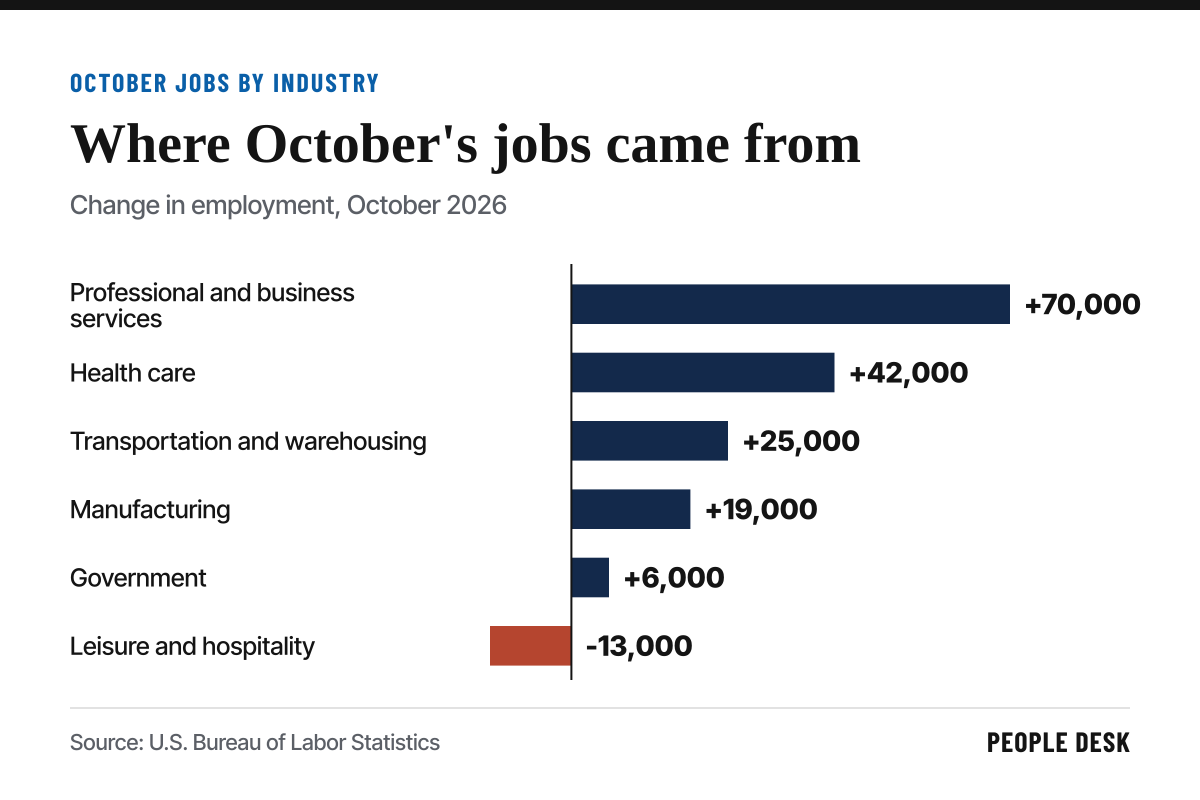
In a year of uneven job growth, health care has been one of the most reliable sources of new employment. The October jobs report showed the sector adding 42,000 jobs, according to the Bureau of Labor Statistics, second only to professional and business services among major industries that month. We break down the full sector picture in our industry jobs report.
Why health care keeps growing
Demographics drive much of the demand. An aging population needs more medical care, from hospital stays and surgeries to outpatient treatment, home health visits and long-term care. Chronic conditions require ongoing management. Advances in treatment create new services and specialties.
Health care employment is also less sensitive to economic cycles than many industries. People need care whether the economy is growing or slowing, which helps explain why health care hiring tends to continue even when other sectors pull back.
The BLS projects about 189,100 openings for registered nurses each year on average from 2024 to 2034, many to replace nurses who retire or leave the occupation. Similar replacement needs exist for nursing assistants, medical assistants, home health aides and technicians.
Many of those openings come from turnover rather than growth. Health care jobs can be physically and emotionally demanding, with long shifts, weekend work and high stakes. Workers leave for other employers, other roles or other industries, and each departure creates another opening.
Where the jobs are
Hospitals remain large employers, but much of the growth has come from outpatient settings such as physician offices, urgent care centers, outpatient surgery centers and home health agencies. Care has steadily shifted toward settings outside the hospital, and staffing has followed.
Those outpatient roles often offer daytime hours and weekends off, which makes them attractive to workers leaving hospital shift work. That shift helps outpatient employers recruit but adds to hospital retention problems.
Hospitals still face persistent shortages. The 2026 NSI report found registered nurse turnover of 17.6 percent and a vacancy rate of 8.6 percent, as covered in our nurse staffing report. Senior living operators report similar challenges, described in our senior living workforce report.
The ripple effect on other employers
Health care's steady hiring affects employers far beyond the industry. Many health care support roles, such as patient care technicians, nursing assistants, dietary aides, environmental services workers and front desk staff, draw from the same pool of workers as retail, hospitality, warehousing and food service.
Health systems often offer benefits that can be hard for other employers to match, including tuition assistance, clear career ladders into nursing and other licensed roles, and stable schedules. A worker weighing a retail job against a hospital job with a path to becoming a nurse may choose the hospital even at similar starting pay.
That competition helps explain why hospitality employers are struggling with quits, as reported in our hospitality turnover report.
Lessons from health care hiring
Other industries can borrow some of health care's tools. Career ladders that show entry-level workers a path to higher-paying skilled roles help with both recruiting and retention. Earn-while-you-learn programs and tuition support make those ladders real. Registered apprenticeships, used increasingly in health care for roles like medical assistants and pharmacy technicians, offer a structured model, as described in our apprenticeship guide.
Health care employers, for their part, continue to look for ways to improve retention, especially among new hires. Nurse residency programs, flexible scheduling and internal float pools have become common responses.
Pay has risen in many health care support roles as well, which raises the bar for other employers recruiting from the same pool. Employers outside health care should check local wage data for overlapping roles, using the sources described in our guide to federal wage data.
Kentucky and Louisville
Health care is one of the largest employment sectors in the Louisville area, home to several major health systems along with insurers and health-related businesses. Employers across the region compete with those systems for workers in support roles, administration, IT and facilities.
Local partnerships help build the pipeline. Health sciences pathways in the Academies of Louisville introduce high school students to health careers, as covered in our report on the Academies of Louisville.
What to watch
Health care hiring could slow if policy changes reduce insurance coverage or reimbursement, or if health systems face financial pressure. Watch monthly health care employment in the jobs report and job openings in health care and social assistance in the JOLTS data, explained in our JOLTS guide.
For now, health care remains one of the economy's most consistent employers. Businesses that compete with it for workers should study what it offers and decide which pieces they can match.
Sources
- U.S. Bureau of Labor Statistics, The Employment Situation for October 2026
- U.S. Bureau of Labor Statistics, Registered Nurses, Occupational Outlook Handbook
- NSI Nursing Solutions, 2026 National Health Care Retention and RN Staffing Report
We link to the original reports and filings wherever possible. See something we got wrong? Tell us and read our corrections policy.