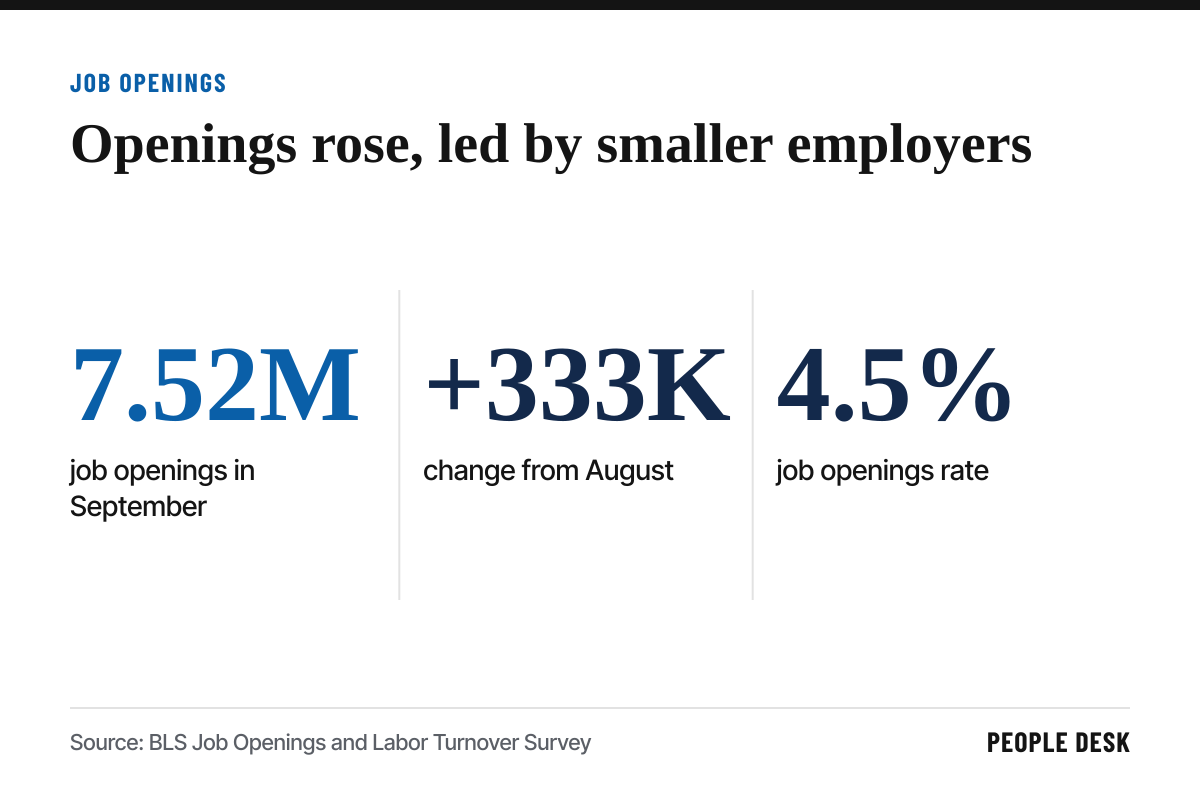
Large employers spend heavily on employer branding, with recruitment marketing teams, video production and paid campaigns. Small businesses rarely have any of that. Yet they are doing much of the hiring. Small and medium-sized businesses accounted for nearly all of the increase in job openings in September, as we reported in our JOLTS analysis. They also saw the most resignations.
For small employers, the encouraging part is that the most persuasive parts of an employer brand cost little or nothing.
Advantages small employers already have
Speed is the biggest one. A small business owner can review an application in the morning, interview that afternoon and make an offer the next day. Large companies with multiple approval layers often take weeks. Candidates notice, and many accept the first good offer they receive, as discussed in our hiring speed guide.
Small employers can also be more personal. A handwritten note, a call from the owner or a quick tour of the shop floor during an interview leaves an impression that a large company's automated process rarely matches.
Flexibility is another. Small employers can often adjust schedules, roles and responsibilities to fit a strong candidate in ways a large organization's policies do not allow.
Access matters too. Employees at small businesses often work directly with owners and senior leaders, see how their work affects the business and gain broader experience faster. For many candidates, that visibility is appealing.
Get the basics right online
Candidates research employers before applying. Glassdoor reports that 83 percent of job seekers are likely to research company reviews and ratings when deciding where to apply. Small employers should claim their profiles on major review and job sites, add accurate information and photos, and respond thoughtfully to reviews, as described in our guide to responding to reviews.
Check the company's Google Business Profile as well. Many candidates search the company name and see that listing first. Accurate hours, photos of the workplace and a link to current openings help.
A simple careers page is enough. List current openings with pay ranges, schedules and duties, a few sentences about what it is like to work there and photos of real employees and the actual workplace. Our guide to what candidates look for on a careers page covers the essentials.
Use real voices
Small businesses have an authenticity advantage. A short phone video of the owner explaining what the company does and what kind of person thrives there can be more persuasive than a polished corporate ad. Quotes from employees about why they stay carry weight, especially when they mention specifics.
If employees are featured, make sure participation is voluntary and connections are clear, as explained in our report on employee testimonials.
Lean on the community
Small employers are often embedded in their communities. Sponsoring a local team, partnering with a school, hosting a job fair at a community center or working with local workforce boards builds familiarity among potential applicants. In Louisville, KentuckianaWorks and Greater Louisville Inc. connect small employers with job seekers and training programs.
Referrals are especially effective for small businesses. Employees often know people who would fit well, and a modest referral bonus can bring in candidates faster than paid ads, as described in our guide to referral programs.
Be honest about trade-offs
Small employers may not match large companies on benefits, formal training or advancement ladders. Saying so openly, while explaining what the business does offer, builds trust. Candidates who join with accurate expectations are more likely to stay.
Where possible, close the gaps creatively. Some small businesses offer extra paid time off, flexible scheduling, tuition help for specific courses or the chance to learn several roles. Showing employees the full value of their compensation, as described in our guide to total rewards statements, can also help.
Track what works. Ask every new hire how they heard about the job and what made them apply. Over a few months, the answers show which channels and messages bring in the best candidates.
Treat every candidate well
In a small community, word travels quickly. A candidate who was ignored or treated rudely tells friends. A candidate who was treated with respect, even if not hired, may recommend the business to others or apply again later. Small employers that respond to every applicant stand out in a market where many large employers do not.
Employer branding does not require a big budget. For small businesses, it requires attention, honesty and a hiring process that respects people's time.
Sources
- U.S. Bureau of Labor Statistics, Job Openings and Labor Turnover Summary
- Glassdoor, Employer Branding Statistics
- KentuckianaWorks, Employer Services
We link to the original reports and filings wherever possible. See something we got wrong? Tell us and read our corrections policy.