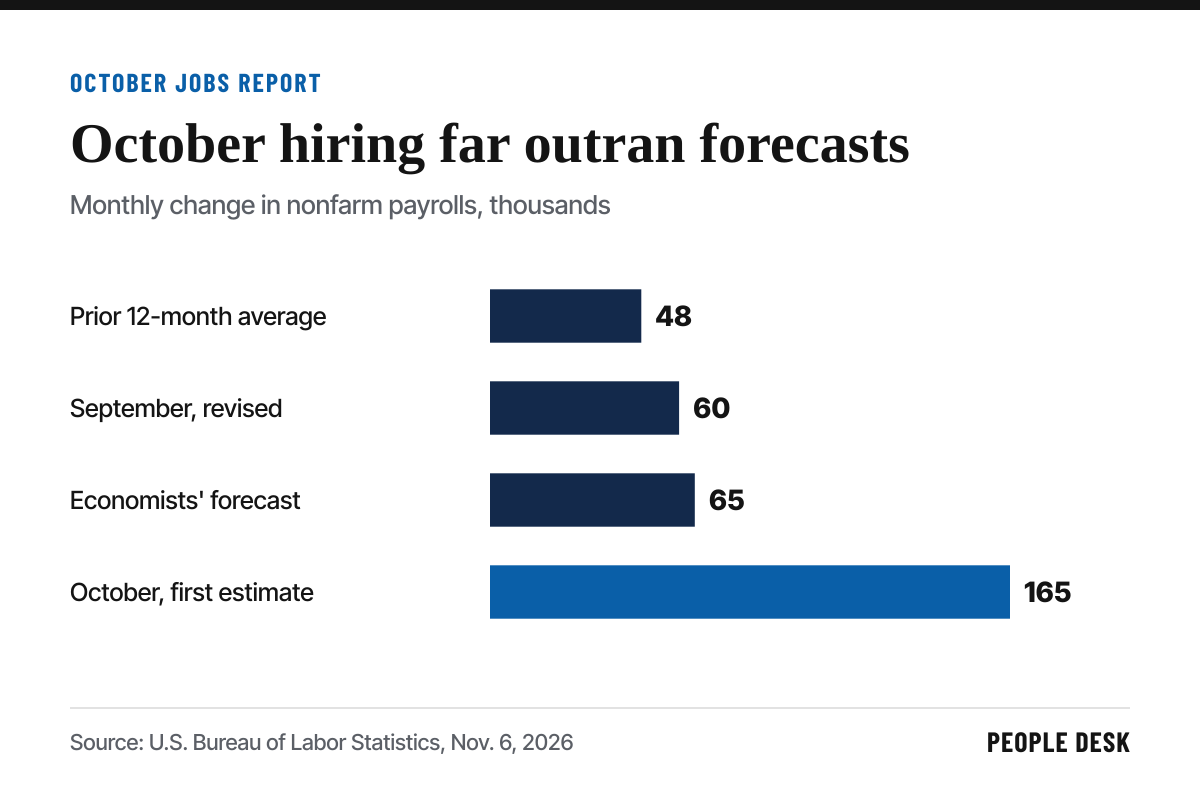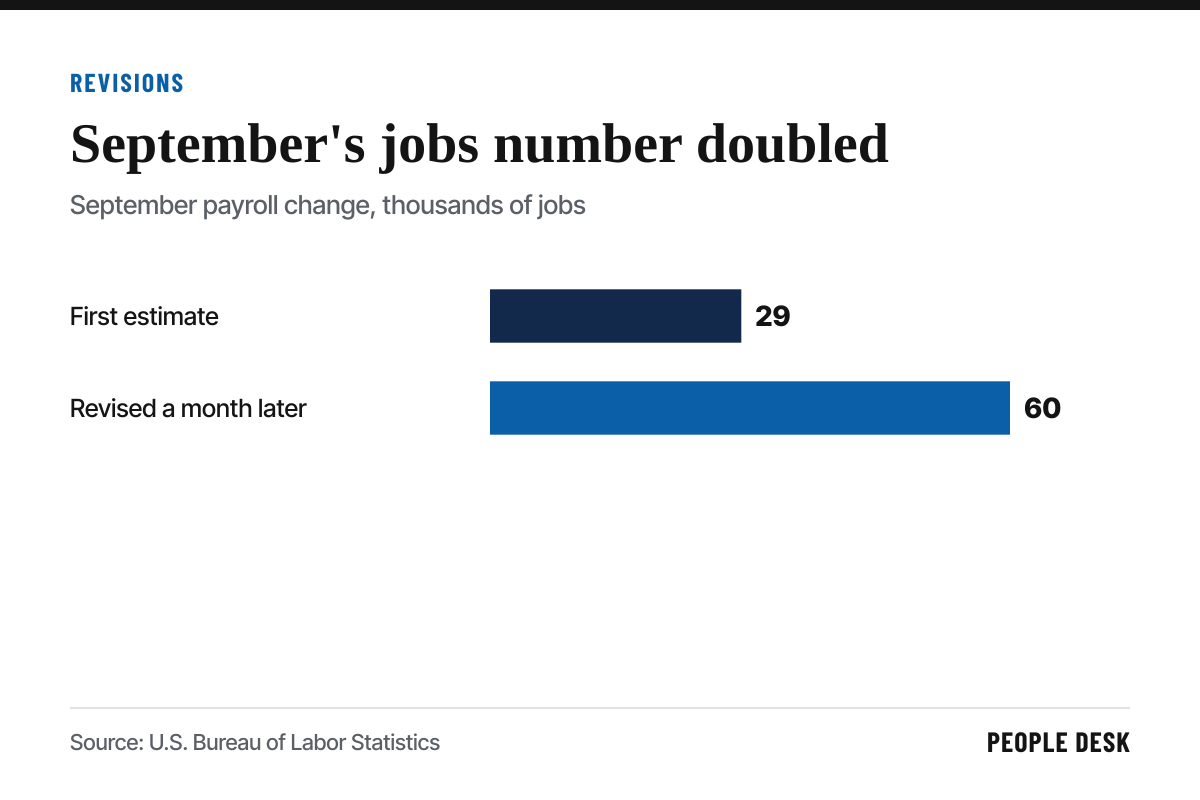
When the October jobs report came out, the headline gain of 165,000 drew most of the attention. A quieter number mattered almost as much. September's payroll growth, first reported at 29,000, was revised to 60,000. August and September together came in 84,000 higher than the Bureau of Labor Statistics had first estimated. For employers trying to read the labor market, revisions like these are a reminder that the first number is only a draft.
Why first estimates change
The monthly payroll figure comes from the Current Employment Statistics survey, which collects data from a large sample of businesses and government agencies. Not every employer responds by the deadline for the first release. As more responses arrive, the BLS updates its estimate.
Each month's number is revised twice, once with the following month's report and again the month after that. The second and third estimates are based on a much larger share of responses, so they are generally more reliable than the first.
Revisions can go either way. In some months they add tens of thousands of jobs, as they did for September. In others they subtract. During turning points in the economy, revisions often move in the same direction for several months, which can mean the first estimates were consistently missing a shift that was already under way.
The annual benchmark
Once a year, the BLS also benchmarks the payroll survey to a fuller count of jobs drawn from unemployment insurance tax records, which cover nearly all employers. A preliminary estimate of that benchmark revision is published in late summer, and the final revision is incorporated with the January jobs report released in February.
Benchmark revisions can be large. They capture errors that build up over the year, including those from the model the BLS uses to estimate jobs created by new businesses and lost when businesses close. That model is necessary because new firms are not yet in the survey sample, but it can drift when business formation changes quickly.
Two surveys, two stories
The jobs report actually combines two surveys. Payroll employment comes from the establishment survey. The unemployment rate comes from the Current Population Survey, a monthly survey of households. The two measure different things and sometimes send different signals in the short run.
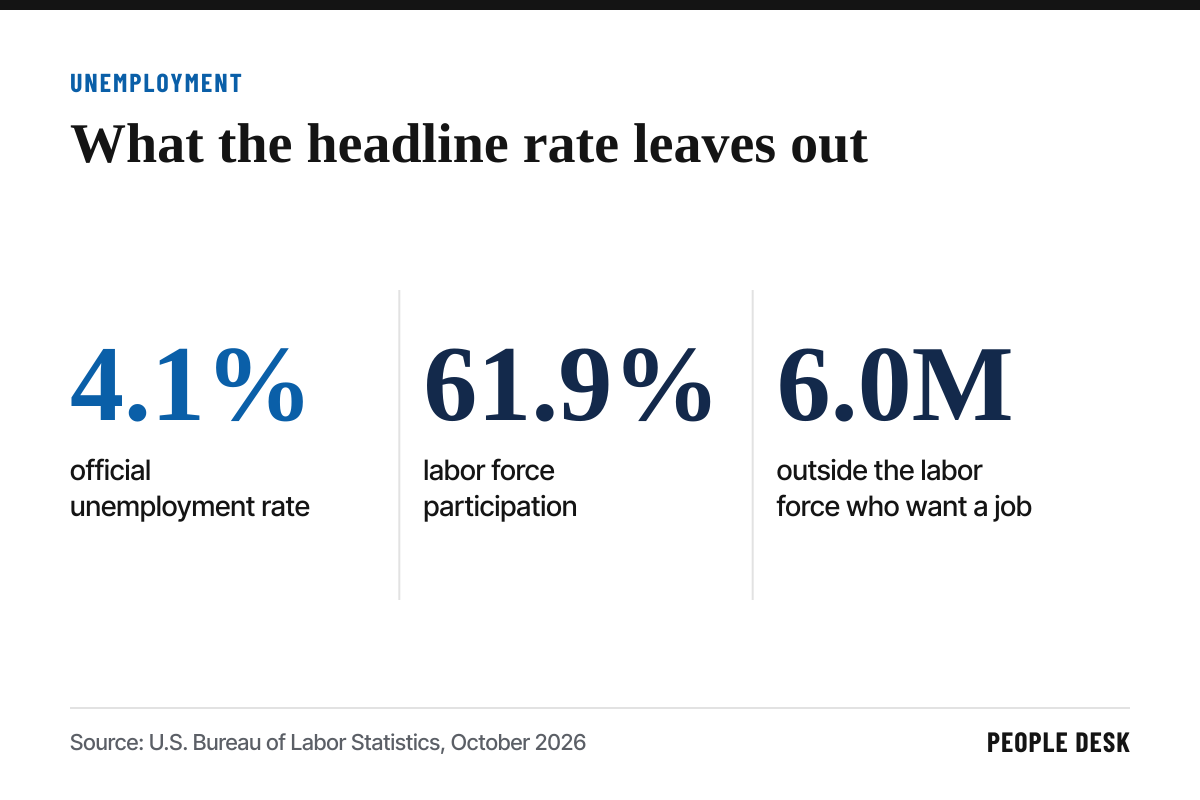
The household survey counts people, including the self-employed and agricultural workers, while the payroll survey counts jobs, so a person with two jobs is counted twice. The household survey is not revised month to month in the same way, but its population controls are updated each January. We explain the unemployment measures in our guide to U-3 and U-6.
What it means for employers
The practical lesson is to look at trends rather than single months. A three-month average of payroll gains smooths out much of the noise. Over the 12 months before October, payrolls grew by an average of only 48,000 a month, which put the October gain in context, as we noted in our October jobs report analysis.
Check revisions every month. The first paragraph of each jobs report states how much the prior two months were revised. If revisions keep moving in one direction, the labor market may be stronger or weaker than the headlines suggest.
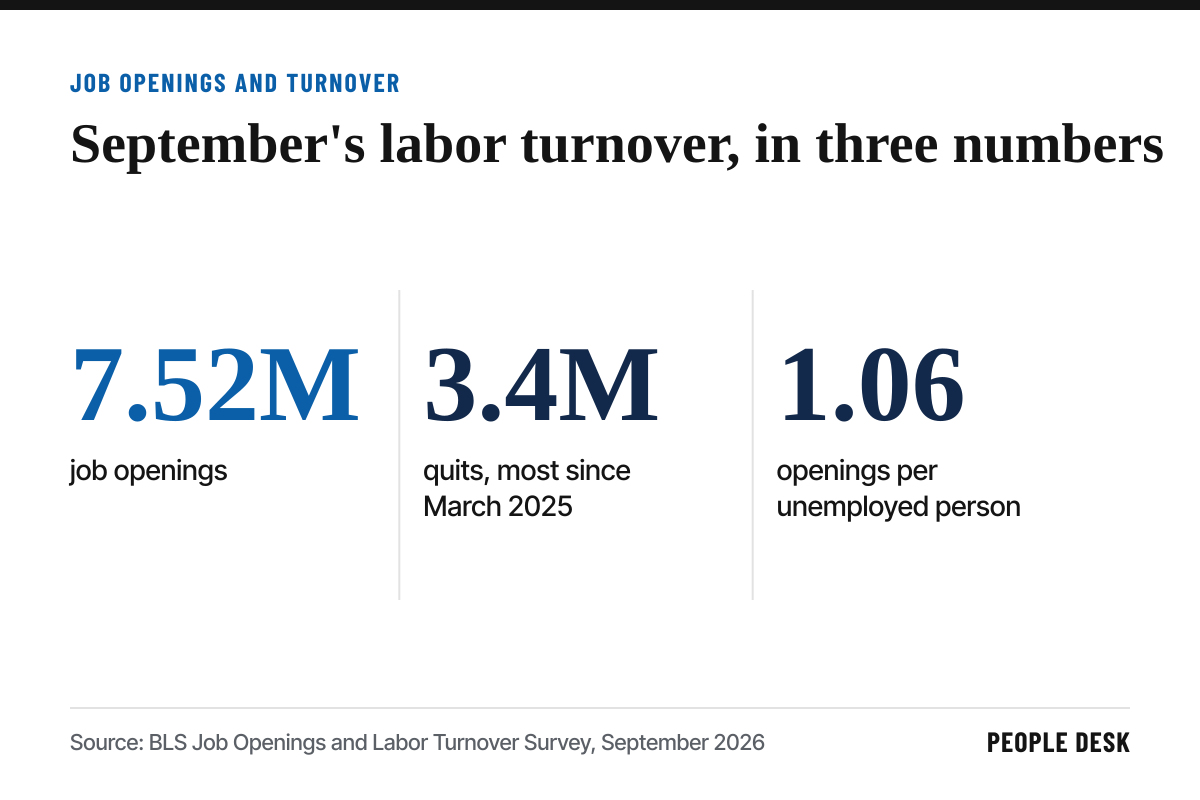
Pair the payroll data with other measures. Job openings and quits from the Job Openings and Labor Turnover Survey, explained in our JOLTS guide, show how much demand employers have and how confident workers feel. Announced layoffs from Challenger, Gray and Christmas offer another view, as we covered in our layoff report.
Local data matters too. National numbers rarely match conditions in a single metro area. Kentucky employers should watch state releases from the Kentucky Center for Statistics, as described in our county unemployment analysis.
The jobs report is one of the most useful economic indicators available, and its revisions are a feature of careful measurement rather than a flaw. Employers who treat the first estimate as provisional, watch the revisions and look at several months together will read the labor market more accurately than those who react to each headline.
For hiring plans, that means building in flexibility. A strong month should not trigger a hiring spree, and a weak month should not trigger a freeze. The trend over a quarter tells a far more reliable story.
Sources
- U.S. Bureau of Labor Statistics, The Employment Situation for October 2026
- U.S. Bureau of Labor Statistics, CES Net Birth-Death Model and Benchmark Information
- U.S. Bureau of Labor Statistics, CES Revisions Between Over-the-Month Estimates
- Hunt Scanlon, U.S. Economy Adds 165,000 Jobs in October
We link to the original reports and filings wherever possible. See something we got wrong? Tell us and read our corrections policy.